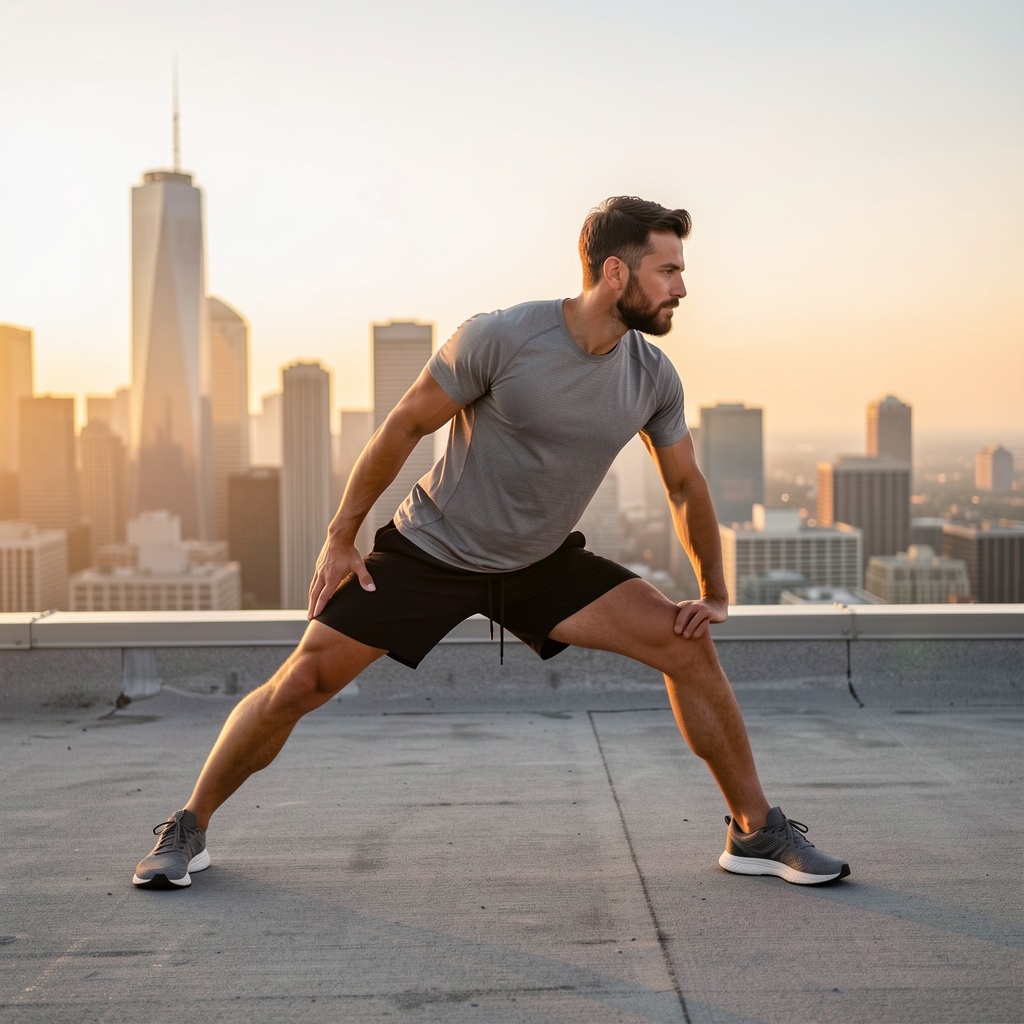
The weekend holds a particular position in the ecology of a man's active life. It is at once a recovery interval from the concentrated loads of the working week and an opportunity for the kind of sustained outdoor movement that structured gym sessions cannot replicate. This field report examines what outdoor fitness — trail running, extended hiking, open-water swimming, and informal sports — contributes to an active lifestyle, and why the men's wellness conversation tends to undersell it.
The Nature of Sustained Outdoor Movement
Indoor gym environments, despite their utility, produce a narrow band of physical stimuli. Movement occurs in controlled planes, on calibrated surfaces, against measured resistance. The body adapts efficiently to these conditions — which is precisely the problem. Sustained outdoor movement introduces a different register of physical demand: variable terrain, shifting environmental conditions, proprioceptive challenge that no machine can fully replicate.
The research on outdoor movement versus indoor exercise consistently identifies improvements in psychological wellbeing as one of the most robust differentiators. Exposure to natural environments during sustained physical effort has been associated with lower cortisol profiles post-activity and higher reported wellbeing scores than equivalent indoor exercise at matched intensities. This is not a small effect in a controlled laboratory — it is an observable pattern that holds across age groups and fitness levels.
For men managing work-life balance challenges and the cumulative weight of professional pressure, this distinction matters. A Sunday spent on a trail or in open countryside is not simply leisure. It is, in functional terms, a form of active recovery that operates across physical and cognitive dimensions simultaneously.
"A Sunday on a trail is not simply leisure. It is, in functional terms, active recovery operating across physical and cognitive dimensions simultaneously."
TOVEN REVIEW — FEBRUARY 2026
Weekend Adventures as a Fitness Goal Architecture
One of the underappreciated functions of weekend outdoor objectives is their role in structuring fitness goals across the week. A man who has committed to a trail race in six weeks, or a multi-day hiking route, or a cycling challenge, has an external anchor point that reorganises his training week in ways that intrinsic goals often fail to do.
Event-based fitness planning is not exclusively the domain of competitive athletes. The principle applies to recreational outdoor fitness with equal force. The commitment to a specific outdoor objective produces a training structure that gym-based goals rarely generate. Strength sessions become purposeful conditioning for the terrain, rather than isolated exercises. Nutrition becomes fuel rather than a separate concern.
Belgium's geography — which positions riders and hikers within an hour of the Ardennes, the Wallonian ridgelines, and the coastal dunes of the North Sea — makes this kind of event-based weekend planning exceptionally practical. The infrastructure for outdoor fitness, from marked trail networks to cycling routes of varied intensity, exists in sufficient density to support year-round outdoor movement without logistical complexity.
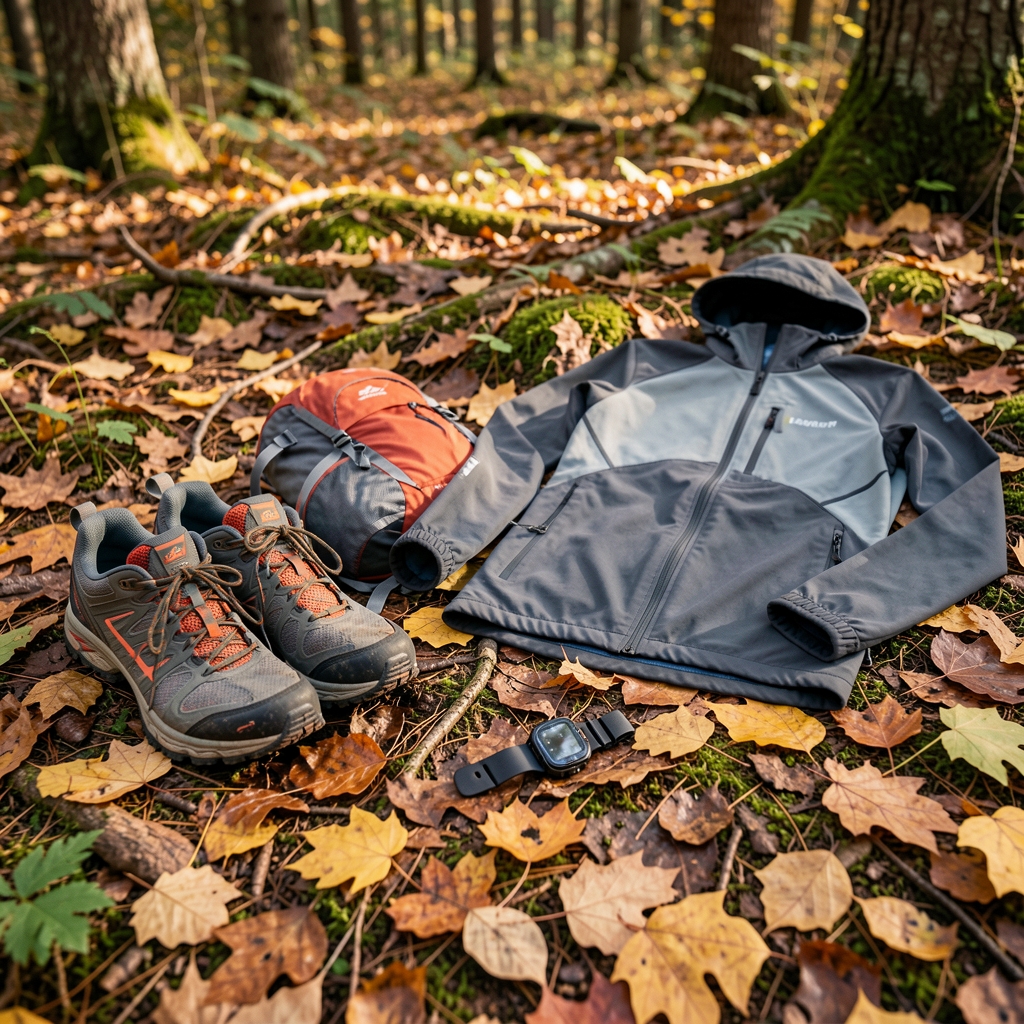
TRAIL KIT — TOVEN ARCHIVE, FEBRUARY 2026
Stress Management Through Movement Variety
The men's wellness conversation around stress management tends to default to breathwork, journaling, and structured mindfulness practices. These are documented and valuable tools. What they share, however, is a static quality — they are practices of stillness in response to the activity-overload of modern work. For many men, the inverse approach is more effective: physical movement of sufficient intensity and duration to produce a genuine neurological shift.
Outdoor fitness at moderate-to-high intensity — a two-hour trail run, a full-day cycling route, a sustained hike with elevation — produces what exercise physiologists describe as an acute reduction in circadian stress signals following the session. The effect is not identical to a 30-minute gym session at matched metabolic cost. Duration and environmental novelty appear to amplify the response.
The practical implication for work-life balance is simple: a weekend that includes a sustained outdoor physical challenge creates a demonstrable separation from the working week in ways that passive leisure rarely achieves. The man who returns from a six-hour day in the hills on Sunday arrives at Monday with a different baseline than the man who spent Sunday on a sofa. This is not a moralising observation — it is a straightforward report of what the physical evidence shows.
Body Composition and Outdoor Endurance Work
For men focused on body composition, outdoor endurance work occupies a specific and complementary position to gym-based strength training. Sustained aerobic output in outdoor environments — particularly at moderate intensity over extended durations — supports fat oxidation and cardiovascular conditioning in ways that high-intensity gym intervals do not fully replicate.
The combination of structured strength training during the week and long-duration outdoor movement on weekends produces a broad-spectrum physical adaptation that addresses both lean mass retention and aerobic capacity. This is not a discovery — sports science literature has described the complementary relationship between resistance and endurance training for decades. What is less well communicated in popular men's fitness writing is how accessible this combination is when outdoor movement replaces a second gym session rather than requiring an entirely separate training block.
Nutritional requirements shift meaningfully on days of extended outdoor movement. The caloric demands of a full-day trail run or cycling route are substantially higher than a standard training session. Lean eating strategies and meal prep approaches that work well for gym-focused weeks require adjustment for high-output outdoor days — typically more complex carbohydrates pre-effort and a higher overall protein intake post-effort to support muscle recovery in the days that follow.
The Modern Gentleman's Wardrobe for Outdoor Movement
Seasonal wardrobe planning for outdoor fitness is a practical concern that receives surprisingly little editorial attention in men's wellness publications. The technical clothing required for year-round outdoor movement in Northern Europe involves a modest but specific set of layering decisions, and the quality of those decisions directly affects both comfort and performance across seasons.
A winter hiking layer system centred on moisture-wicking base layers, mid-layer insulation, and windproof outer shells is a different proposition from a summer trail-running kit centred on minimal weight and maximum ventilation. The modern gentleman's guide to outdoor fitness wardrobe does not require a large budget — it requires deliberate selection of a small number of versatile, high-quality items that cover the primary environmental conditions of the intended activity.
The editorial observation here is consistent with the broader principle running through this field report: deliberate selection over accumulation. Whether the subject is grooming essentials, morning habits, or trail gear, the men who sustain an active outdoor lifestyle longest tend to be those who select fewer, better items and use them consistently, rather than those who accumulate extensive kits that create decision overhead before every outing.
- — Outdoor movement exposes the body to a broader stimulus range than indoor training, supporting proprioceptive and psychological adaptation not replicated by gym sessions.
- — Event-based weekend objectives restructure the training week more effectively than intrinsic goals for most men.
- — Sustained outdoor effort produces a demonstrable separation from work-week stress that shorter, lower-intensity sessions do not reliably achieve.
- — Weekend outdoor endurance work complements gym-based strength training to produce body composition adaptations not available from either approach alone.

Eleanor Ashcroft is a contributing writer for Toven Review, focusing on outdoor fitness, active recovery, and men's seasonal lifestyle planning. Her field reports draw on direct participation in outdoor endurance events across Europe.
More from this author